Working from home in Vancouver comes with a particular set of challenges: condos where the “office” is a corner of the living room, basement suites with low natural light, and dining chairs that seemed fine until they became your full-time seat. With hybrid work now standard across the Lower Mainland, the home office is no longer a temporary setup — it is where you spend half your working life. Furnishing it properly is not a luxury; it is the difference between sustainable comfort and a slow accumulation of aches. This guide covers how to build a home office that actually works, whatever space you have.

The Non-Negotiables: Chair, Desk, Screen Height
If the budget only stretches to three things, make them these:
- A real task chair. Not a dining chair, not a stylish accent chair — a proper task chair with adjustable seat height, lumbar support, and adjustable armrests. Your back will log more hours in this chair than anywhere else in your home. This is the single highest-impact home office purchase.
- A desk at the right height. A compact height-adjustable desk is ideal — it fits different users, allows sit-stand working, and its small footprint suits condos. If fixed, 48×30 inches handles a laptop-plus-monitor setup; add a keyboard tray if the height is not quite right for you.
- Screen at eye level. Laptop users need a laptop stand plus an external keyboard and mouse — the “hunch over the laptop” posture destroys necks within weeks. Better still, add an external monitor on an arm: bigger screen, correct height, and your laptop becomes a secondary display.
Everything else — storage, lighting, decor — is secondary to these three. Get them right and 80% of home office discomfort disappears.
Working With Small Spaces
Vancouver real estate means many home offices are carved from bedrooms, living rooms, or closets. Strategies that work:
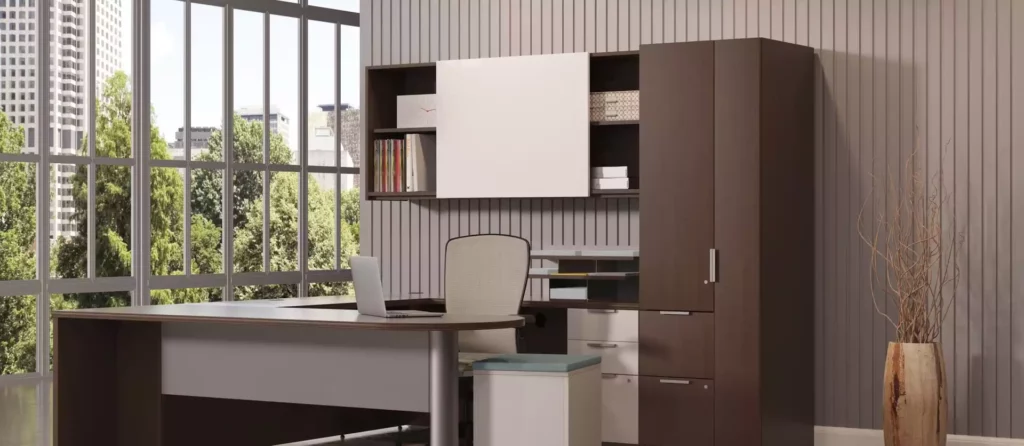
- Go vertical: Wall-mounted shelves, hutches, and pegboards store supplies without consuming floor area. A 48-inch desk with storage above it holds as much as a much larger footprint.
- Choose compact furniture: Scale matters. A full-size executive desk overwhelms a 10×10 room; a 48-inch desk with a slim profile leaves room to breathe — and to push the chair back.
- Define the zone: A rug under the desk, a room divider, or even just consistent placement signals “this is the office” to your brain — and to family members. Psychological boundaries matter when the commute is twelve steps.
- Fold-away options: Wall-mounted drop-leaf desks and folding chairs work for truly occasional use, but be honest: if you work from home three-plus days a week, you need real furniture, not camping gear.
- Closet offices (“cloffices”): A reach-in closet fits a 48-inch desk perfectly. Remove the doors (or slide them), add a task light and a power bar, and you have a dedicated office that disappears at 5 p.m.
Lighting for Home Offices
Spare bedrooms and basement suites often have the worst light in the house. Fix it deliberately:
- Position perpendicular to windows where possible, for the same glare reasons as any office.
- Add a task light — non-negotiable for paperwork and video-call fill light. An architect-style lamp with adjustable arms covers both.
- Basement suites: Layer light — overhead plus task plus a floor lamp — to fight the cave feeling. Daylight-mimicking bulbs (4000K) help during Vancouver’s dark winters.
- Video calls: Face the light source. A window or lamp in front of you lights your face; a window behind you turns you into a silhouette. Your colleagues will thank you.
Video Call Setup
Hybrid work means your home office is also a broadcast studio. A few upgrades with outsized impact:
- Background: A tidy bookshelf, a plant, or a simple room divider beats a messy bedroom. What is behind you is your professional image now.
- Camera height: At or slightly above eye level. Stack the laptop on books if needed — the “looking up the nose” angle undermines credibility.
- Audio: A basic USB headset or microphone improves call quality more than any camera upgrade. Built-in laptop mics pick up every echo in a bare room; soft furnishings (rug, curtains, upholstered chair) reduce it.
Storage and Boundaries
Home offices accumulate clutter fast because there is no facilities team. A small filing pedestal or drawer unit keeps work papers out of living spaces. At the end of the day, close the laptop, file the papers, and — if possible — close a door or screen on the office. The physical ritual of “leaving work” protects evenings, especially when work and home share walls.
What About Tax Deductions?
Many Vancouver remote workers can claim home office expenses — but the rules have specifics around exclusive-use space and employment status. This is not tax advice: talk to an accountant about what qualifies for your situation. What is universally true is that keeping receipts for furniture purchases is smart regardless.
Frequently Asked Questions
What is the minimum I should spend on a home office chair?
Enough to get adjustable seat height, lumbar support, and armrests from a commercial-grade line — typically a few hundred dollars for a quality refurbished task chair. It is the one item where cutting corners costs you physically. A good used commercial chair beats a new budget chair every time.
Can I work from my dining table permanently?
For a day or two a week, with a laptop stand and external keyboard, it is tolerable. Full-time, no — dining tables are the wrong height for most people, dining chairs lack support, and the lack of boundaries erodes both posture and work-life separation.
How do I fit a home office in a one-bedroom condo?
Carve a defined zone: a 48-inch desk against a wall or in a closet, vertical storage above, a proper task chair that tucks fully under the desk, and a rug or divider to mark the boundary. Keep it compact but complete — half-measures in small spaces just create clutter.
Should I buy new or used home office furniture?
Used commercial-grade furniture is the sweet spot for home offices: a refurbished task chair and a quality used desk cost less than mediocre new equivalents and last far longer. Save the “new” budget for items where hygiene or warranty matter most to you.
A well-furnished home office pays for itself in comfort, focus, and professional presence on every video call. Whether you need a single great task chair or a complete compact home office setup delivered anywhere in Metro Vancouver, M&E Business Furnishings can help — call 604-200-7961, email info@meimport.com, or visit mefurn.com.
M&E Business Furnishings | info@meimport.com | 604-200-7961 | mefurn.com