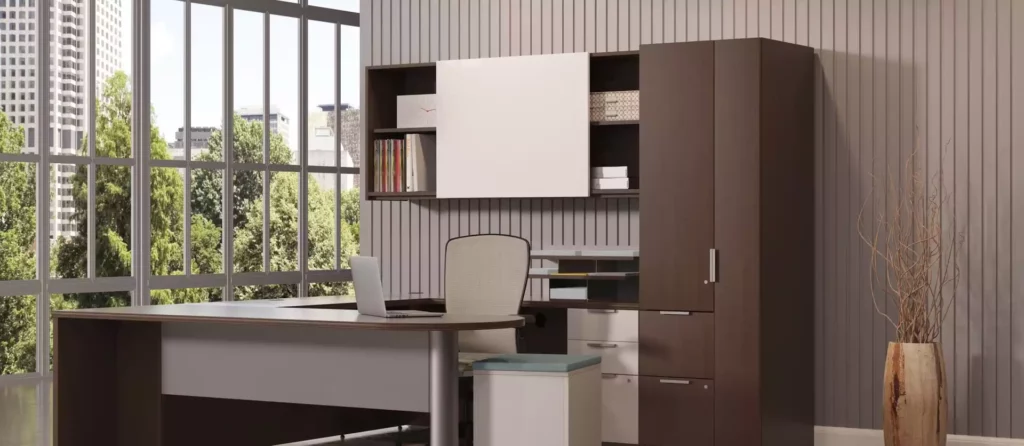
The executive office is the most visible room in the company. It hosts the conversations that matter — board discussions, key client meetings, difficult decisions — and it signals what the organization values every time someone walks in. Designing an executive office is not about extravagance; it is about getting the details right: a desk with real presence, seating that keeps long meetings comfortable, lighting that flatters, and a layout that supports both focused work and conversation.

Here is a practical guide to designing executive offices that impress without wasting money — for Vancouver companies furnishing partner offices, C-suites, and founder spaces.
What an Executive Office Needs to Do
An executive office serves three functions that pull in different directions: it is a focused workspace for demanding individual work, a meeting space for one-on-ones and small groups, and a representation of the company’s brand. The design has to balance all three. A desk optimized only for computer work leaves nowhere to host a conversation; a lounge-only layout leaves the executive working from a coffee table. Plan for all three zones from the start.
The Executive Desk: Presence and Function
The desk is the anchor of the room, and it earns its footprint. What to look for:
- Generous proportions: an executive desk should comfortably hold a full computer setup plus layout space for documents — 72 inches wide is a practical starting point.
- Material quality: real wood veneer, solid wood details, or premium laminates with honest textures. This is the room where material quality is most visible, so it is the worst place to economize on surfaces.
- Height adjustability, done quietly: sit-stand executive desks exist that preserve a furniture-grade look while offering full ergonomic range — worth specifying for health-conscious leaders.
- Integrated storage: matching pedestals, credenzas, and lateral files keep the worksurface clear. Clutter on an executive desk reads as disorganization to every visitor.
- Cable management: power and data routed invisibly. Nothing undermines a premium desk faster than a tangle of cables.
Collections designed for private offices — with coordinated desks, returns, bridges, and storage walls — give the room a composed, intentional feel that mixing vendors rarely achieves.
Seating: The Executive Chair and Guest Chairs
The executive task chair should be the best chair in the office — full ergonomic adjustment, premium upholstery, and a design with presence. Leaders sit long hours; the chair has to support that without a second thought. Guest chairs across the desk deserve equal care: clients and colleagues spend meaningful time in them, and uncomfortable guest seating quietly undermines every meeting. A small lounge grouping — two comfortable chairs and a side table — creates the conversational corner that makes an executive office genuinely useful for informal discussions.
Layout: Zones for Work, Meeting, and Thinking
The most effective executive offices are zoned:
- The work zone: desk, task chair, and primary technology, positioned for natural light without screen glare.
- The conversation zone: a small round table with two to four comfortable chairs, or a lounge grouping — for meetings that do not need a desk between people.
- The background zone: credenza, storage wall, or bookshelf behind the desk. With video calls standard, this wall is now a broadcast set — compose it deliberately.
Keep circulation generous. An executive office that feels cramped fails at its primary job; leave room to move, to welcome guests, and for the door to open without hitting furniture.
Lighting, Acoustics, and the Details
Lighting makes or breaks the room. Layer it: natural light controlled with proper window treatments, a statement pendant or chandelier for presence, and a task light at the desk for real work. Avoid relying solely on overhead fluorescents — they flatten the room and tire the eyes. Acoustics matter too: executive offices host confidential conversations, so solid doors, acoustic ceiling treatment, and soft furnishings that absorb sound are worth specifying. Art, plants, and a few personal objects complete the room — the difference between an office and a showroom is the sense that someone real works there.
Technology Integration
Plan technology before furniture, not after. Video conferencing needs a camera position, a display, and good lighting on faces. Wireless presentation from the conversation-zone table keeps meetings fluid. Discreet power — floor boxes or wall outlets exactly where the desk and table sit — avoids the extension-cord look. And acoustic privacy for calls may warrant sound masking or a white-noise system in adjacent areas, especially in open-plan floors where the executive office sits among workstations.
Budget: Where to Spend and Where to Save
Not every dollar in an executive office works equally hard:
- Spend on: the desk surface quality, the task chair, guest seating comfort, and lighting. These are what people see, touch, and sit in.
- Save on: over-accessorizing, oversized furniture that crowds the room, and technology that will be obsolete in three years — keep tech modular and replaceable.
- Consider total cost: a quality executive suite with a 10-to-12-year warranty costs less per year than a cheaper set replaced twice.
Frequently Asked Questions
How large should an executive office be?
Large enough for three zones — work, conversation, and circulation — without crowding. For most executives, 150 to 250 square feet works well. Bigger is not automatically better; a well-zoned 180-square-foot office beats a cavernous 400-square-foot room with furniture lost in it.
Should the executive office match the rest of the office?
It should coordinate, not necessarily match. Use the same finish family or design language as the broader office, elevated a step in material quality. The executive office should feel like the best version of the company’s aesthetic, not a different company.
Is a sit-stand desk appropriate for an executive office?
Absolutely — and furniture-grade height-adjustable desks now exist that look entirely at home in an executive setting. Given the long hours leaders work, the health case is strong.
How do we design for video calls?
Compose the wall behind the desk as a background: storage, shelving, or art — not a blank wall or a cluttered credenza. Ensure faces are lit from the front, position the camera at eye level, and keep the desk area tidy. Every executive is now on camera daily; design for it.
An executive office done well is a business asset: it supports better work, better meetings, and a stronger impression on everyone who enters. If you are designing partner offices, C-suites, or founder spaces anywhere in Metro Vancouver, M&E Business Furnishings can help you specify coordinated executive furniture — desks, seating, storage, and lighting — and deliver and install it. Call 604-200-7961 or email info@meimport.com, or start at mefurn.com.
M&E Business Furnishings | info@meimport.com | 604-200-7961 | mefurn.com