Why Open Offices Get So Loud — and Why It Costs You
Open-plan offices are everywhere in Metro Vancouver, from tech startups in Yaletown to logistics firms in Richmond. The layout saves space and encourages collaboration — but it also creates a constant background hum of phone calls, keyboard clatter, foot traffic, and hallway conversations. Research consistently links office noise to lower concentration, higher stress, and more mistakes. In fact, surveys regularly find that more than half of open-office workers say noise is their biggest workplace frustration.
The fix is not tearing down the open plan. It is choosing furniture that absorbs sound instead of bouncing it around. Acoustic office furniture — panels, pods, upholstered pieces, and workstations designed with sound control in mind — can cut perceived noise dramatically without a single structural renovation. For Vancouver businesses leasing space they cannot rebuild, that matters.
1. Start with the Biggest Surface: Walls and Partitions
Hard surfaces reflect sound. Glass, drywall, concrete floors, and bare desks all send noise ricocheting across an open floor. The first acoustic win is adding absorption where the most sound hits:
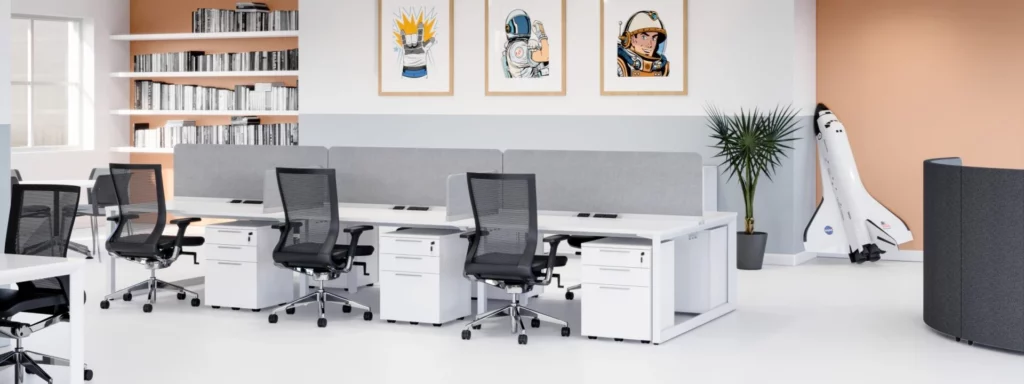
- Acoustic desk dividers. PET felt or fabric-wrapped panels that sit between workstations block direct speech paths and absorb mid-range frequencies — the range where human voices live. They are the single most cost-effective acoustic upgrade for benching rows.
- Freestanding acoustic partitions. Taller felt screens create quiet zones around focus desks or call areas without the cost of building walls. Look for NRC (Noise Reduction Coefficient) ratings of 0.8 or higher.
- Wall-mounted acoustic panels. If your lease allows it, fabric or wood-wool panels on the largest blank wall in an open room can noticeably tame echo. In rental spaces, freestanding versions on posts achieve much of the same effect.
Vancouver tip: many downtown and Burnaby towers have concrete floors and glass exteriors — beautiful, but acoustically brutal. Pair acoustic panels with area rugs and upholstered furniture to compensate for all that reflective surface.
2. Choose Upholstered Seating Over Hard Shells
Every upholstered chair, sofa, and ottoman in your office is a small sound absorber. Break rooms and lounge areas are the perfect place to double down: high-back upholstered lounge chairs and acoustic sofas with wrap-around backs create micro-zones where a one-on-one conversation does not carry across the room.
Even your task chairs help. Fully upholstered task chairs absorb more sound than mesh-back models. That is not a reason to swap ergonomic chairs, but when you are furnishing new zones — reception, waiting areas, collaboration corners — favour fabric over hard plastic and metal wherever comfort allows.
3. Acoustic Pods and Phone Booths for Calls
The single loudest activity in most open offices is phone and video calls. One person on speakerphone can disrupt a dozen colleagues. Acoustic office pods and phone booths solve this at the source:
- Single-person call pods give staff a place to take calls, join video meetings, or record content without leaving the floor.
- Two-to-four-person meeting pods handle quick huddles and interviews that used to require booking a meeting room.
- Focus pods with a desk and task chair offer heads-down space on demand — gold for open plans without private offices.
Pods cost far less than building out meeting rooms, they arrive pre-assembled or flat-packed, and they can move with you when your lease changes. For growing Vancouver companies that add headcount every quarter, that flexibility is worth a lot.
4. Smart Workstation Layout Reduces Noise Too
You do not always need new products — sometimes you need a smarter floor plan. Acoustic layout rules that cost nothing:
- Put noisy zones together. Sales, support, and reception teams generate the most call noise; cluster them away from focus workers like developers and accountants.
- Use storage as a sound barrier. Rows of filing cabinets and bookcases between departments double as acoustic mass that blocks sound paths.
- Angle, don’t align. Workstations facing every direction scatter reflected sound; long parallel rows of desks act like echo chambers.
- Keep pathways out of the centre. Routing foot traffic along walls instead of through the middle of work zones cuts the chatter that follows every hallway encounter.
5. The Ceiling and Floor Are Part of the Furniture Plan
Acoustics pros treat the ceiling as the most important surface in an open office, since it is the biggest one. If your space has an exposed concrete or metal deck ceiling — common in converted Gastown lofts and Mount Pleasant warehouses — consider acoustic baffles or clouds hung above workstation zones. They preserve the industrial look while cutting reverberation.
On the floor, carpet tiles remain the best acoustic flooring for offices. If you have polished concrete or hardwood you want to keep, large area rugs under workstation clusters absorb footfall and speech reflections. Anti-fatigue and chair mats in hard-floor areas also cut the rolling noise of office chairs, which adds up across a busy floor.
How to Measure Whether It Is Working
You do not need an acoustics consultant to judge the basics. Try this before-and-after test: stand in the middle of your open area and clap once, sharply. Count how long the echo lingers. After adding acoustic panels, dividers, or a pod, repeat the test — the echo should die noticeably faster. For a more objective check, free smartphone decibel-meter apps give you rough readings: aim for background levels under 50 dB in focus areas.
If background noise still sits above 55–60 dB after furniture-level fixes, consider a sound-masking system (low-level background sound that makes speech less intelligible). It pairs beautifully with acoustic furniture — the panels cut reflections while masking smooths what is left.
Budgeting for Acoustic Furniture in Vancouver
Acoustic upgrades scale to almost any budget. A sensible order of operations for a 20-person Vancouver office:
- Quick wins ($1,000–$3,000): acoustic desk dividers on existing benching, a few area rugs, and rearranging noisy teams away from focus workers.
- Mid-range ($5,000–$15,000): freestanding acoustic partitions, an upholstered lounge zone, and wall panels in the noisiest room.
- Full treatment ($15,000+): one or two call pods plus targeted ceiling baffles — the package that makes an open plan genuinely quiet.
Refurbished acoustic pods and panels appear regularly on the Vancouver used market and can cut those numbers by a third or more. Just check that fabric and felt are clean and undamaged — acoustic material does not forgive stains or compression.
Ready for a Quieter Office?
A noisy office is not a productivity strategy — it is a furniture problem with a furniture solution. From acoustic desk dividers to full call pods, the right pieces turn an echoing open floor into a place where people can actually think.
M&E Business Furnishings | info@meimport.com | 604-200-7961 | mefurn.com